


Electric Boiler: The Perfect "Green" Choice or a Grid Infrastructure Burden?
The question of switching to an electric boiler has become a major headache for many plant managers in the industrial zones of Binh Duong and Dong Nai. The issue goes beyond a simple desire to "green" production — it also involves mounting pressure from communities living around industrial facilities. Yet the fear of skyrocketing electricity bills, especially during peak hours, combined with the capital cost of transformer substations rated at thousands of kVA, causes many business owners to hesitate. Is choosing an industrial electric boiler a genuine way out, or simply a new burden on electrical infrastructure?
Every day, I field questions from factory owners and maintenance managers alike. Everyone wants cleaner production but no one wants to operate at a loss. I once encountered a food processing plant located near a residential area that was hit with a wave of complaints about smoke, dust, and noise from its fuel-oil-fired boiler. They looked to the electric boiler as a savior. But when the numbers for transformer substation investment and projected operating costs came up, they began to waver. In this article, I want to take a deeper look at the electric boiler together, through the lens of the Vietnamese reality.
How Does an Industrial Electric Boiler Work, and What Are Its Key Advantages?
An industrial electric boiler, also known as an electric resistance steam boiler, operates by using electric heating elements (resistors) to directly heat water and generate steam. The principle is similar to an electric kettle in a home kitchen, but on a vastly larger scale, capable of reaching steam generation capacities of several tons per hour (TPH). One ton of steam per hour is equivalent to bringing 1,000 kg of water to a boil within one hour, sufficient to supply steam to multiple large production lines. The greatest strength of electric boilers is zero direct emission of smoke, dust, or polluting exhaust gases. This allows food processing plants, pharmaceutical facilities, and operations located near residential areas to avoid pressure from environmental inspections and community opposition.
In addition, electric boilers operate relatively quietly, significantly reducing noise compared to conventional fuel-fired boilers, which also helps address the noise pollution issue that is one of the most common sources of friction with neighboring communities. Another advantage is their high degree of automation, making it easy to control and monitor working pressure (typically ranging from a few bar to tens of bar, comparable to truck tyre pressure but multiplied many times over) and temperature. Fast start-up time and stable steam supply are qualities that production lines requiring continuous steam particularly value. Especially for industries that demand clean steam free from combustion contaminants, such as pharmaceuticals and healthcare, the electric steam boiler is a near-optimal choice.
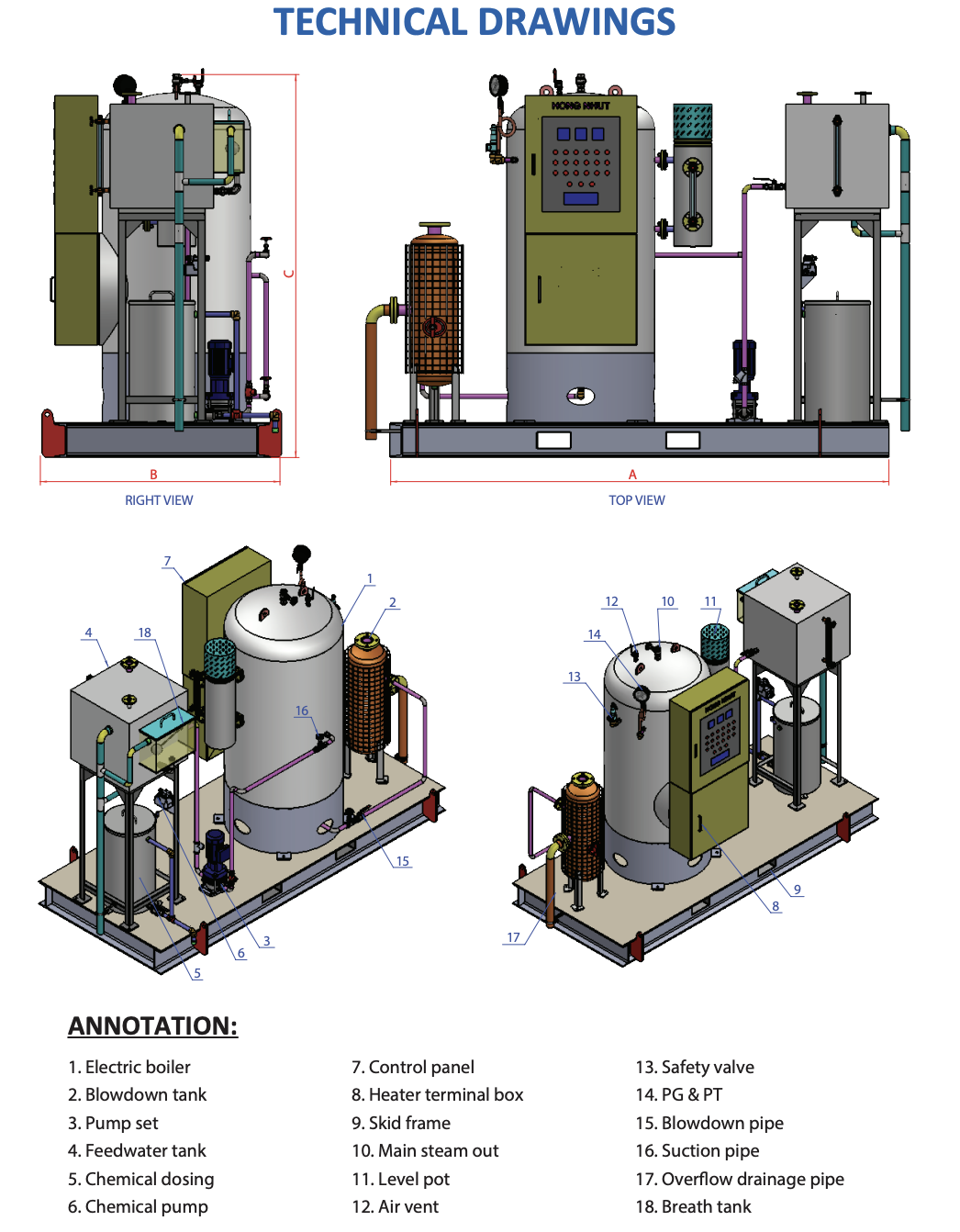 Basic construction of an industrial electric boiler. (Photo: Hong Nhat)
Are the Operating Costs of an Industrial Electric Boiler Really a Significant Burden?
Electricity cost is the make-or-break factor when investing in an electric boiler. I have seen many projects stall at exactly this point. In Vietnam, industrial electricity tariffs, particularly during peak hours, present a very real challenge.
For example, a 1 TPH electric boiler requires approximately 750–800 kW of electrical power. If operated for 8 hours per day during peak tariff hours (when electricity is most expensive), the monthly electricity bill can reach hundreds of millions of dong, before even accounting for transformer substation installation costs.
However, if a plant can take advantage of off-peak operating hours or apply smart load-shifting control systems, this burden can be significantly reduced. In terms of maintenance, electric steam boilers are generally less complex than oil-fired or coal-fired boilers, and experience less scale (limescale) buildup inside the tubes, provided the feedwater treatment system performs well. Scale refers to mineral deposits that accumulate on the inner walls of boiler tubes when feedwater is not properly treated; these deposits reduce heat transfer efficiency and increase electricity consumption. Labor costs for operation may also be lower due to the high level of automation.
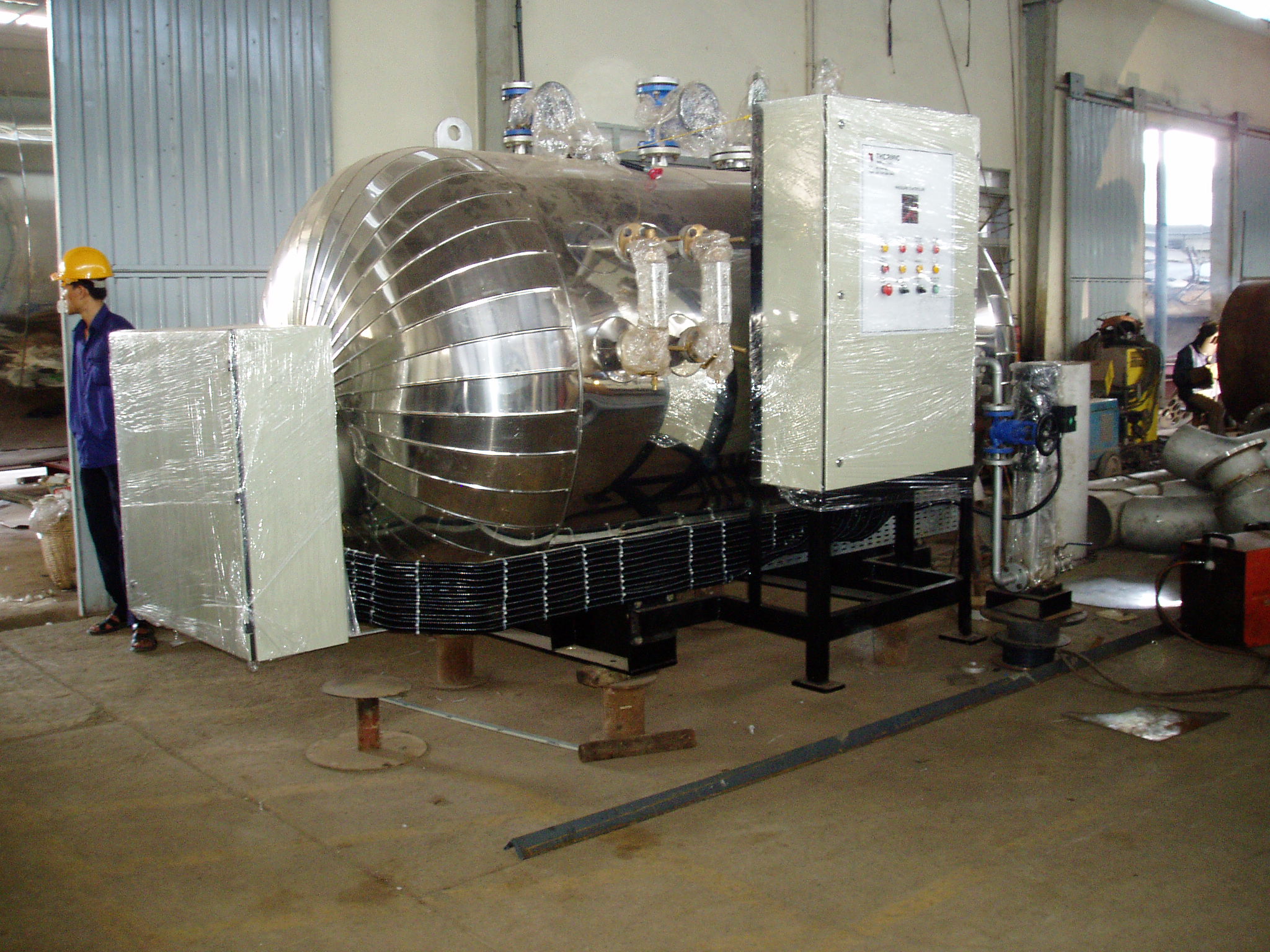
Comparing Electric Boilers and Fuel-Oil-Fired Boilers: Which Is the Better Choice for Vietnamese Enterprises?
To make a sound decision, we need to put both the advantages and disadvantages of these two boiler types on the table in the context of Vietnamese operating realities:
| Criteria | Electric Boiler | Fuel-Oil-Fired Boiler |
|---|---|---|
| Environmental emissions | No smoke, no dust, no noise. | Smoke, dust, CO₂, NOₓ, SOₓ emissions. Noise from induced draft fans and pumps. |
| Combustion efficiency | Very high (nearly 99%), minimal thermal losses. | Lower (75–85%), with losses through flue gas exhaust. |
| Fuel cost | Electricity (high during peak hours, low during off-peak hours). | FO/DO fuel oil (fluctuates with market; more stable than peak-hour electricity). |
| Initial capital cost | Lower for the boiler unit itself, but higher for electrical infrastructure (transformer substation). | Higher for the boiler unit itself, fewer special requirements for electrical infrastructure. |
| Infrastructure requirements | Requires a high-capacity transformer substation and stable power supply (voltage sags are common in Binh Duong and Dong Nai). | Requires fuel oil storage tanks, fuel supply system, and flue gas stack. |
| Maintenance and operation | Simple, low scale buildup (with proper water treatment), high automation. | More complex (firebox cleaning, burner nozzle servicing, flue gas handling); requires experienced personnel. |
| Safety level | Higher (no fuel combustion risk), lower risk of water hammer (the phenomenon where condensed steam causes sudden loud impacts and equipment damage). | Risk of fuel combustion/explosion; requires strict pressure and water level monitoring. |
In my experience, many plants in Vietnam opt for fuel-oil-fired or biomass boilers because fuel costs are more stable and less dependent on a grid supply that is prone to voltage sags. However, if a plant has access to a reliable, stable power supply, and especially faces very strong environmental compliance pressure, the electric boiler remains a direction worth serious consideration.
Infrastructure Standards and Key Considerations When Installing High-Capacity Electric Steam Boilers in Vietnam
Installing a high-capacity electric steam boiler demands thorough preparation of the electrical infrastructure. A 2 TPH electric boiler may require approximately 1,500–1,600 kVA of installed capacity, a figure that is far from trivial. You need to carefully review your power supply contract with EVN (Vietnam Electricity), assess the local grid's supply capacity, and plan for contingencies during periods of overload. Pulling in an additional transformer substation and upgrading power lines is a substantial capital expenditure that can account for 30–50% of the total initial project cost. I once witnessed a business that had to delay installation by nearly six months solely due to complications in obtaining permits and completing the substation construction.
Grid voltage sag, particularly in the industrial zones of Binh Duong and Dong Nai during the dry season or peak hours, is also a significant challenge. Voltage sag not only degrades boiler performance but can also cause damage to electrical equipment. Installing a voltage stabilizer or a smart compensation control system is therefore essential. Equally important is the feedwater treatment system for the electric boiler. Substandard feedwater will rapidly cause scale buildup, shortening the service life of the electric heating elements (resistors) and increasing maintenance costs.
Expert Advice
- Conduct a thorough electrical load assessment: Before making a decision, plot the complete electrical load profile for your entire plant and project the additional demand from the electric boiler. Evaluate the feasibility of operating during off-peak hours to reduce electricity costs.
- Inspect the electrical infrastructure: Consult immediately with your local EVN office and a qualified electrical engineering consultant to assess grid supply capacity, the cost of upgrading the transformer substation and power lines.
- Invest in a feedwater treatment system: This is a modest investment that delivers substantial returns, protecting your equipment and sustaining long-term electric boiler efficiency.
An electric boiler is not a "one-size-fits-all" solution but a strategic choice that demands careful analysis of both economic and environmental factors. When properly calculated and invested in, it can absolutely become an effective "green choice" for your business, reducing the environmental burden and optimizing production.
CONTACT INFORMATION:
Company: HONG NHUT THERMAL & REFRIGERATION ENGINEERING CO., LTD
Hotline/Zalo: 0961546854
Email: [email protected]
Website: https://hongnhut.com/
Address: 117A Binh Thoi Street, Phu Tho Ward, Ho Chi Minh City
Factory Address: 150C Ho Hoc Lam Street, An Lac Ward, Ho Chi Minh City
Related Articles
- Khởi động và ngừng lò hơi đúng quy trình tránh sốc nhiệt (30/07/2026)
- Van an toàn, áp kế, relay mức nước: 3 vệ sĩ của nồi hơi (16/07/2026)
- Nồi hơi cho ngành chế biến thủy sản: cấp hơi hấp, sấy, tiệt trùng ổn định (06/07/2026)
- Hồ sơ kiểm định an toàn nồi hơi cuối năm: cần chuẩn bị gì? (01/07/2026)
- Cách tính công suất nồi hơi theo nhu cầu thực tế (24/06/2026)
Latest News


