


Comparing 5 Types of Industrial Boilers: Fluidized Bed, Chain Grate, Oil/Gas, Biomass, and Electric
An in-depth technical and commercial analysis of 5 industrial boiler types — fluidized bed, chain grate, oil/gas, biomass, and electric — covering thermal efficiency, Total Cost of Ownership (TCO), operational risks, and real-world case studies from our field deployments.
The pressure of energy transition is knocking at every factory door. You face a barrage of questions: Is biomass firing truly cheaper? Can you absorb price volatility if you switch to gas? Or do you bite the bullet and invest in an electric boiler to earn green certification?
There is no perfect boiler technology. There is only the technology that precisely matches the heat load profile, fuel supply chain, and financial objectives of a specific plant. This article dissects the technical and commercial dimensions of the 5 most common boiler types, equipping you to make a multi-billion-dong investment decision without costly mistakes.
1. WHAT IS A FLUIDIZED BED BOILER (FBC)?
A fluidized bed boiler operates by injecting fuel into a combustion chamber containing a bed of granular material, typically quartz sand or limestone. High-pressure forced draft fans blow air upward through a distributor plate, suspending the sand and fuel in a "boiling" state. Combustion occurs vigorously in this high-temperature turbulent environment (800–900°C), achieving extremely rapid heat transfer to the waterwall tubes.
Compatible fuels: coal fines grades 3A–5A (moisture ≤30%, calorific value ≥3,800 kcal/kg), mixed biomass, bagasse, coconut fiber, rice husks, coffee husks, and low-calorific-value industrial waste (≥2,500 kcal/kg). Fuels with sulfur content up to 3% are acceptable when a limestone sorbent injection system is used.
Practical capacity range: 4–150 T/h. Bubbling Fluidized Bed (BFB) is common at 4–30 T/h; Circulating Fluidized Bed (CFB) from 20 T/h upward.
Quantified Advantages
- Exceptional thermal efficiency: 85–92%.
- Low fuel cost: Fuel consumption of only 80,000–130,000 VND/ton of steam, thanks to the ability to utilize low-cost by-products.
- Low emissions: Firebox temperature controlled below 900°C suppresses thermal NOx formation. In-furnace desulfurization is easily achieved by injecting limestone directly into the combustion chamber.
Limitations and Risks
Initial capital cost is 30–50% higher than a chain grate boiler of equivalent capacity. Auxiliary systems are complex: high-pressure primary air fans, synchronized fuel feeding systems, cyclone separators. Abrasive wear from sand particles incurs significant replacement costs for heat exchanger tubes in the fluidized bed zone after 8–12 years of operation. Requires operators with specialized technical training.
Capital and O&M Costs
- Capital cost: 120–180 USD/kW (BFB); 160–220 USD/kW (CFB).
- O&M cost: 18–28 million VND/ton of steam/year (including scheduled maintenance, sand replacement, and statutory inspection).
- Coal fuel cost: 80,000–130,000 VND/ton of steam, depending on coal grade and actual efficiency.
Best Suited For: MDF, paper, wood processing, and rubber plants with large, consistent biomass by-product streams (>5 T/h). Coal-fired plants >10 T/h seeking to reduce emissions without a full fuel conversion.
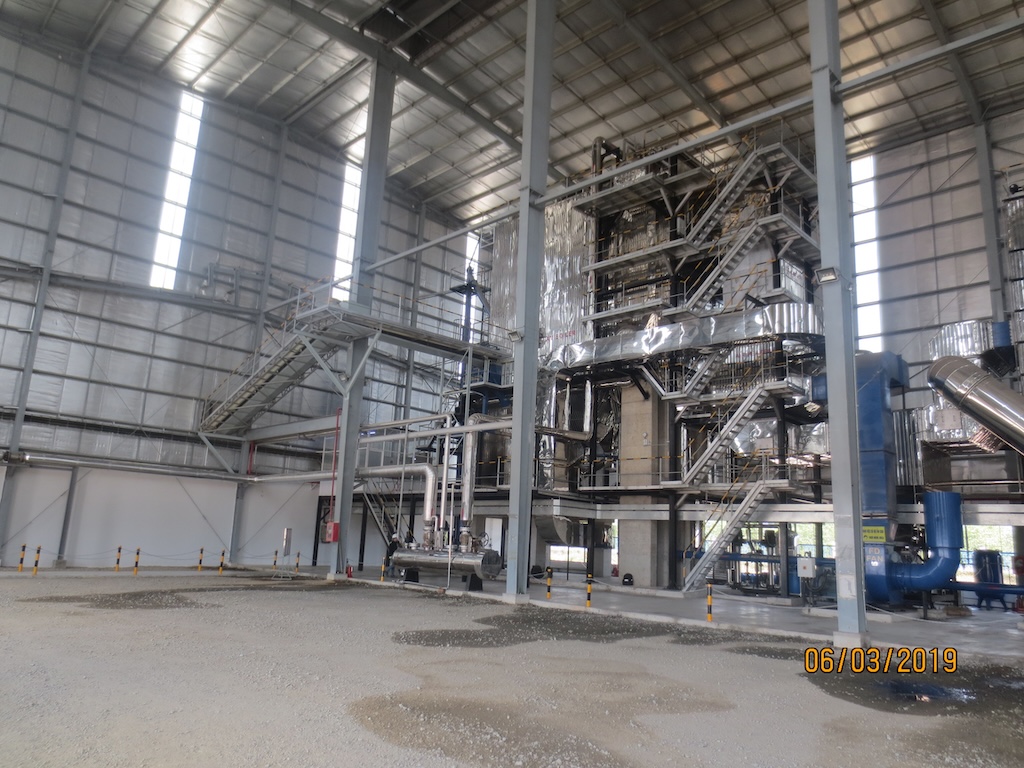
20T fluidized bed boiler manufactured at Hong Nhat (Photo: Ngoc Thuan)
Real-World Case Study:
An MDF plant in Dong Nai hit a production bottleneck due to insufficient process steam. They were operating an aging 6 T/h chain grate boiler firing coal fines. Measured real-world efficiency was only 71%. Local rice husks and sawdust were cheaply available, but the chain grate could not achieve complete combustion, slagging into solid blocks was a recurring problem.
We advised them to boldly decommission the old boiler and invest in an 8 T/h Circulating Fluidized Bed (CFB) boiler system. Operational results six months after commissioning: system efficiency jumped to 87.4%. Downtime due to grate jamming and slagging dropped from 4.2 days/month to 1.1 days/month (mainly scheduled cleaning shutdowns). Financial analysis showed a Return on Investment (ROI) payback period of 4.8 years, driven by the cost differential between loose rice husks and coal fines.
2. WHAT IS A CHAIN GRATE STOKER BOILER?
A chain grate stoker boiler operates by spreading solid fuel onto a continuously moving chain grate, where it is progressively combusted from the feed end to the discharge end on an over-feed combustion principle. Combustion air is supplied from beneath the grate and passes upward through the fuel bed. Ash falls off the trailing end of the grate.
Compatible fuels: coal fines grades 3A–4A (moisture ≤20%, particle size 0–25 mm, calorific value ≥4,500 kcal/kg), small lump coal. Dry biomass (moisture <18%) can be co-fired but at reduced efficiency. Not suitable for high-moisture fuels or low-calorific-value fuels.
Practical capacity range: 2–35 T/h. Beyond this range, the mechanical structure of the chain grate becomes oversized, less durable, and prone to sagging.
Quantified Advantages
- Lowest capital cost in the solid-fuel boiler category: 70–100 USD/kW.
- Simple structure; spare parts are widely available with procurement lead time of less than 48 hours in Vietnam.
- Durable mechanics: Grate service life can reach 10–15 years with proper operation.
- Operation does not require highly skilled personnel; suitable for general-grade technical teams.
Limitations and Risks
- Thermal efficiency of only 75–82%, trailing the fluidized bed by 7–10 percentage points.
- Sensitive to coal quality: a 5% increase in moisture content reduces efficiency by 3–4 percentage points and increases specific coal consumption by 6–8%.
- Higher particulate and SO₂ emissions compared to other combustion technologies.
- Difficulty meeting QCVN 19:2009 Level A when firing high-sulfur coal without additional flue gas treatment systems (additional cost of 2–4 billion VND per boiler).
Capital and O&M Costs
- Capital cost: 70–100 USD/kW.
- O&M cost: 14–22 million VND/ton of steam/year.
- Coal fuel cost (grade 3A fines): 90,000–150,000 VND/ton of steam, depending on market coal prices.
Best Suited For
Textile dyeing, paper, brick, and ceramics plants at 4–20 T/h using consistently specified coal fines. Mid-scale food processing and animal feed plants. Plants seeking to minimize initial capital expenditure while accepting higher operating costs.
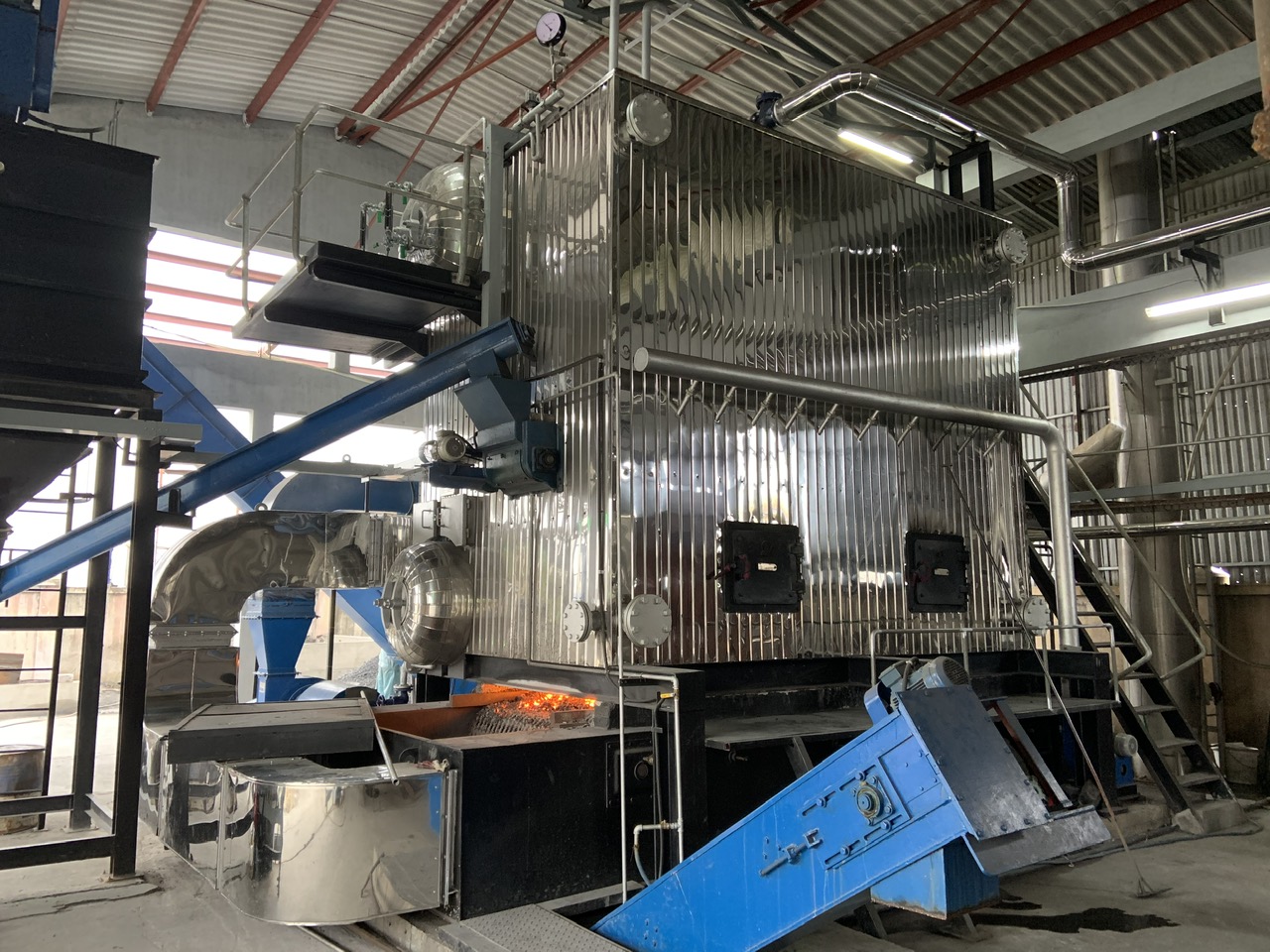
Coal-fired chain grate boiler manufactured at Hong Nhat (Photo: Ngoc Thuan)
Real-World Case Study:
A textile dyeing plant in Binh Duong had been operating three 12 T/h chain grate boilers since 2017, firing grade 3A coal fines under annual supply contracts. Average steam cost: 118,000 VND/ton, stable and within budget.
In 2023, following abnormal flooding, a coal delivery arrived with moisture content of 22–25% (against a contract specification of ≤18%). The plant had no contractual provisions to reject the delivery or claim quality compensation.
Consequences over six weeks:
- Boiler efficiency fell to 68.4%.
- Specific coal consumption per ton of steam rose by 19%.
- Particulate emissions exceeded threshold limits; the plant had to reduce production load for two weeks to avoid an environmental inspection.
- Cost of upgrading the coal drying system (drying conveyor + silo): 380 million VND, an unplanned expense.
The plant subsequently added an on-site moisture inspection clause at the factory gate to all coal purchase contracts, with a 3% of shipment value penalty for every percentage point of moisture above specification.
Key lesson: A chain grate boiler is a reliable technology when fuel is on-spec. Binding fuel quality terms into purchase contracts is a non-negotiable step.
3. WHAT IS AN OIL/GAS-FIRED BOILER?
An oil/gas-fired boiler operates by injecting liquid fuel (FO heavy fuel oil, DO diesel oil) or gaseous fuel (LPG, LNG, CNG) through a burner directly into a cylindrical combustion chamber (a fire-tube shell). The fuel mixes with air and combusts as a suspended flame, radiating heat directly onto the furnace tube walls. Hot flue gases then pass through 2–3 passes of fire tubes for convective heat transfer.
Compatible fuels: natural gas, LPG, DO diesel oil, FO heavy fuel oil. Requires high-standard energy supply infrastructure; storage infrastructure (gas tanks, oil tanks) must comply strictly with fire prevention and firefighting (PCCC) regulations.
Practical capacity range: Extremely flexible, from 0.3–30 T/h. Most common in the sub-5 T/h segment.
Quantified Advantages
- Thermal efficiency of 88–95%, the highest in the fossil fuel boiler category.
- Cold start-up time: 15–40 minutes, the fastest of the 5 technologies (excluding electric boilers).
- Near-zero particulate emissions; NOx ≤150 mg/Nm³ with low-NOx burners, easily meets all current environmental standards.
- High automation: Integrated PLC/SCADA, remote control capability, reduces operating labor by 40–60% compared to coal-fired boilers.
Limitations and Risks
- Fuel cost of 185,000–280,000 VND/ton of steam, the highest in the fired boiler category.
- Global oil/LPG price volatility directly impacts production costs and cannot be fully hedged. LPG requires PCCC-compliant storage tanks costing 2–5 billion VND.
- Dependent on fuel supply infrastructure; natural gas pipeline is not yet available in some provincial industrial zones.
Capital and O&M Costs
- Capital cost: 60–90 USD/kW, the lowest or second-lowest of the 5 technologies.
- O&M cost: 8–14 million VND/ton of steam/year, the lowest due to minimal mechanical components.
- LPG fuel cost: 220,000–280,000 VND/ton of steam (LPG at 24,000 VND/kg, Q1/2024).
Best Suited For
Pharmaceuticals, electronics, food and beverage plants requiring clean steam, operational flexibility, and high automation. Plants under 5 T/h with no space for solid fuel storage. Hotels, hospitals, and premium food plants located deep within densely populated areas where particulate emissions are prohibited, or in industrial clusters that ban heavy trucks transporting coal/biomass.
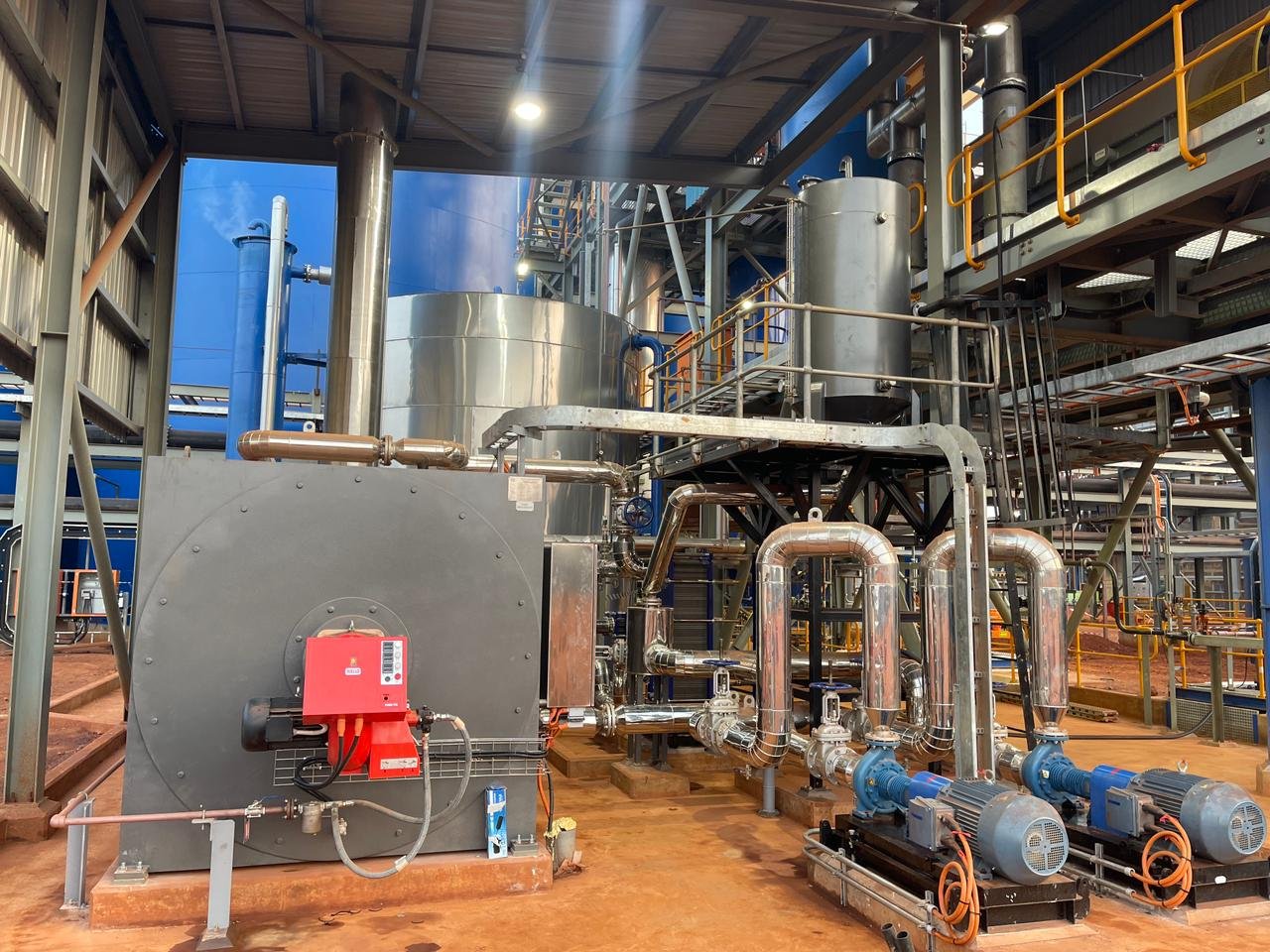
Oil-fired boiler manufactured at Hong Nhat (Photo: Ngoc Thuan)
Real-World Case Study:
A food processing plant in Ho Chi Minh City commissioned a 3 T/h LPG-fired boiler in June 2018. At that time, LPG was priced at 16,500 VND/kg, steam cost was 185,000 VND/ton, competitive with FO heavy fuel oil and fully meeting food hygiene requirements.
From 2021 to 2024, LPG prices rose to 24,500 VND/kg, a 34% increase. Steam cost climbed to 249,000 VND/ton. With annual steam consumption of 18,000 tons, fuel costs increased by 1.15 billion VND/year above the original budget plan.
Management decided against replacing the entire boiler system. Instead, the sterilization line (0.5 T/h capacity, requiring absolutely pure saturated steam) was converted to a 200 kW electrode electric boiler. The 3 T/h LPG boiler continued to serve cooking, drying, and heating duties, loads less sensitive to steam quality.
This hybrid solution reduced LPG consumption by 16%, saving 186 million VND/year compared to the status-quo scenario.
Key lesson: A gas boiler is not a permanent solution, build a +30% fuel price scenario into your investment decision from the outset.
4. WHAT IS A BIOMASS BOILER?
A biomass boiler operates by firing solid biomass fuel (rice husks, sawdust, coffee husks, bagasse, cashew shells, rice straw, agricultural and forestry by-products) through various firebox configurations: step grate, fixed grate, Bubbling Fluidized Bed (BFB), or cyclone combustor.
Compatible fuels: solid biomass with moisture ≤35% and calorific value ≥2,800 kcal/kg. Rice husks: 3,200–3,500 kcal/kg. Sawdust: 3,800–4,200 kcal/kg (dry). Cashew shells: 4,500 kcal/kg but contain Cl and cashew nut shell liquid (CNSL), causing high corrosion risk. Fresh bagasse: 1,800–2,200 kcal/kg (requires co-firing). Do not fire biomass with Cl >0.5% without tube protection measures.
Practical capacity range: 0.5–15 T/h (step grate); 4–80 T/h (BFB biomass).
Quantified Advantages
- Fuel cost of 20,000–80,000 VND/ton of steam when using internal by-products, 70–85% lower than FO heavy fuel oil.
- Carbon neutrality (Carbon Neutral): The primary choice for earning green certification, passing rigorous EU/US ESG audits, and meeting ESG Scope 1 requirements.
- Utilization of production by-products reduces waste disposal costs by 80–150 million VND/year for a mid-scale plant.
Limitations and Risks
- Thermal efficiency of 72–82%, lower than oil/gas boilers and fluidized bed coal boilers.
- Large fuel storage footprint required (biomass has 30–50% lower energy density than coal).
- Fuel quality fluctuates significantly with season.
- High corrosion risk when firing biomass containing Cl, K, and Na, especially cashew shells and rice straw. Flyash generation is 20–30% greater than coal, requiring a larger-dimensioned dust collection system.
Capital and O&M Costs
- Capital cost: 90–140 USD/kW (step grate).
- O&M cost: 20–32 million VND/ton of steam/year, higher than oil/gas boilers due to complex fuel feeding systems and periodic tube maintenance.
- Fuel cost: 20,000–80,000 VND/ton of steam (using own by-products); 100,000–160,000 VND/ton of steam (purchasing market biomass).
Best Suited For
Wood processing, MDF, rubber, cashew, coffee, sugarcane, and paper plants with large and consistent biomass by-product streams. Enterprises under ESG pressure seeking to drive Scope 1 emissions to zero without switching to electricity.
Real-World Case Study:
A cashew nut processing plant in Binh Phuoc invested in a 5 T/h step grate boiler firing cashew shells, an on-site by-product with near-zero transportation cost. Previously, the plant used FO heavy fuel oil with annual fuel costs of 1.82 billion VND for the same steam output.
In year one of operation: savings were exactly as projected, and steam costs fell by 78%. Management was satisfied, with an ROI payback period forecast of 2.8 years.
At month 14 of operation: the maintenance team discovered abnormal corrosion in the steam generation tube bundle in the high-temperature zone. Root cause: cashew shells contain Cl ≈ 0.6–0.8% and CNSL (cashew nut shell liquid) that vaporizes at 300°C, generating HCl and acid dew point corrosion compounds. Tube replacement cost: 210 million VND. Tube inspection interval was shortened from 24 months to 6 months, incurring an additional 80 million VND/year in inspection costs.
Revised actual ROI payback period: 3.9 years, still attractive, but not as originally planned.
Key lesson: Chemical composition analysis of biomass fuel, particularly Cl, K, and Na content, is a mandatory step before boiler design, not after an incident has occurred.
5. WHAT IS AN ELECTRIC BOILER?
An electric boiler converts 100% of electrical energy into thermal energy. Two common configurations exist: resistance type (using immersion heating elements submerged in water) and electrode type (using the water itself as the resistor, passing electric current through the water to generate heat). There is no combustion process.
Compatible energy source: industrial power grid (3-phase, 380V, or medium-voltage 22 kV for large electrode boilers).
Practical capacity range: micro to small scale: 0.05–5 T/h. Electrode boilers can reach 10–20 T/h, but the cost of pulling transformer substation cabling is extremely high.
Quantified Advantages
- Absolute efficiency: 98–99% energy conversion.
- Scope 1 emissions of zero, fully meeting ESG, GMP, and ISO 50001 requirements. No flue stack, no smoke or dust, no noise. Plug in and it runs.
- Cold start to saturated steam in 5–12 minutes, the most operationally flexible of all 5 technologies.
- Minimal installation footprint: 2–8 m², no firebox, no fuel storage, no flue gas treatment system required.
- Pure steam (GMP-grade pure steam) can be generated directly without additional heat exchangers.
Limitations and Risks
- Fuel (electricity) cost of 350,000–500,000 VND/ton of steam, 2–3 times higher than gas, 4–6 times higher than biomass by-products.
- Not economically viable above 5 T/h at current industrial electricity tariffs in Vietnam.
- Dependent on grid stability; UPS or backup generator required for continuous-duty applications.
- Extremely stringent feedwater quality requirements (DI/RO water) for electrode-type boilers.
Capital and O&M Costs
- Capital cost: 40–70 USD/kW, the lowest of the 5 technologies.
- O&M cost: 4–8 million VND/ton of steam/year, the absolute lowest.
- Electricity cost: 350,000–500,000 VND/ton of steam, depending on voltage level and operating hours.
Best Suited For
Pharmaceuticals (pure steam, GMP), electronics (cleanroom), food sterilization, laboratories, and plants under extreme ESG compliance pressure with capacity requirements below 2 T/h.
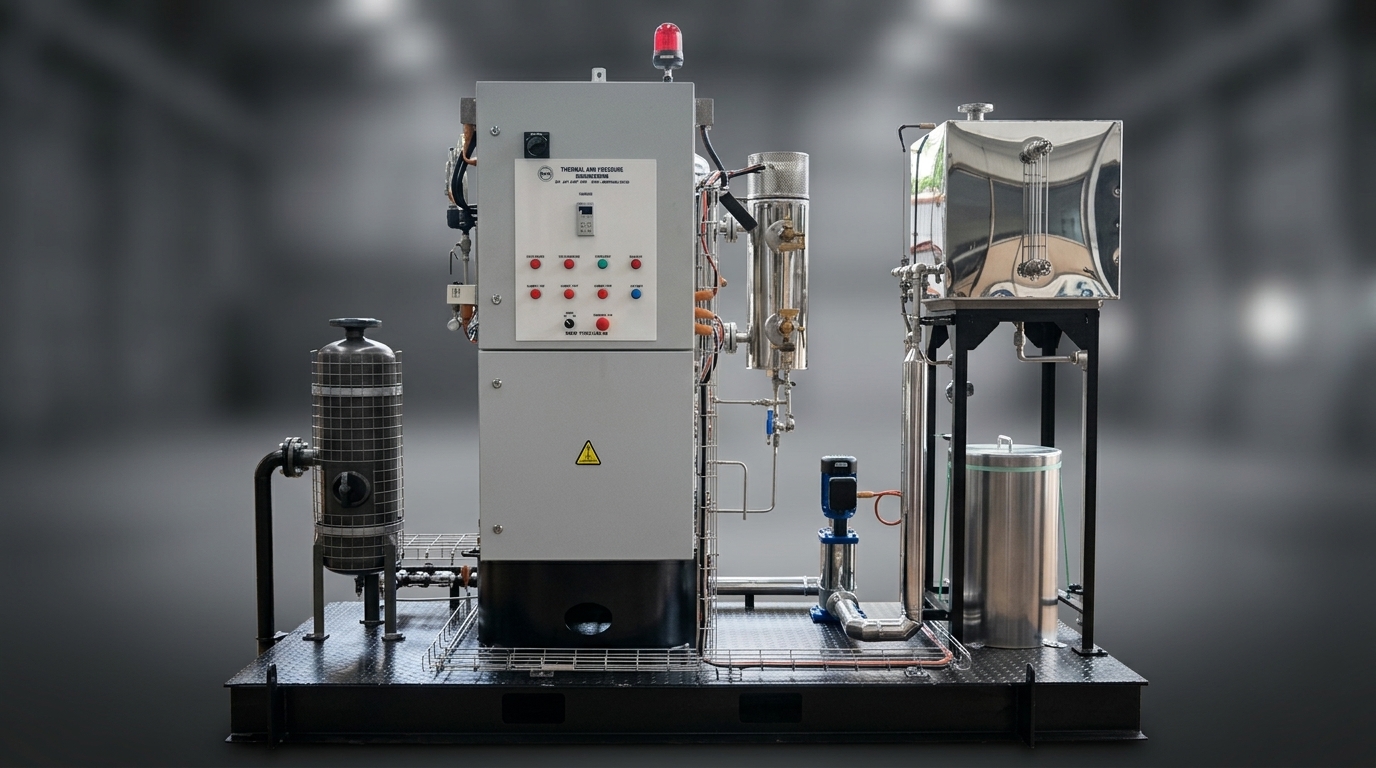
Resistance electric boiler manufactured at Hong Nhat (Photo: Ngoc Thuan)
Real-World Case Study:
A pharmaceutical plant in an industrial zone on the outskirts of Hanoi required a pure steam source for equipment sterilization. The required capacity was very small: 0.3 T/h. They chose to purchase a 200 kW electrode electric boiler rather than invest in a small gas boiler package. Measured actual steam cost reached 420,000 VND/ton, 2.1 times higher than the LPG option.
However, in return they saved 200 m² of plant floor space (no boiler house or gas storage room required), eliminated the need for licensed boiler operators, and, most critically, achieved a 100% score on GMP cross-contamination inspection and passed rigorous ESG audits from their European partners with ease.
Key lesson: At micro-scale and in cleanroom environments, energy cost takes a back seat to safety and quality standards.
Comparison Table: 10 Technical Criteria Across 5 Industrial Boiler Types
| Criteria | Fluidized Bed | Chain Grate | Oil/Gas | Biomass | Electric |
|---|---|---|---|---|---|
| Thermal efficiency (%) | 85–92% | 75–82% | 88–95% | 72–82% | 98–99% |
| Capacity range (T/h) | 4–150 | 2–35 | 0.3–30 | 0.5–80 | 0.05–5 |
| Fuel / energy source | Coal, mixed biomass | Coal fines, dry biomass | FO/DO oil, LPG, LNG | Solid biomass | Grid electricity |
| Max. steam pressure (bar) | 130 (CFB) | 25 | 35 | 25 | 16 |
| NOx emissions (mg/Nm³) | ≤200 | 300–500 | 80–150 | 250–400 | 0 |
| CO₂ emissions (relative) | Medium–High | High | Medium–High | ~Neutral (biogenic) | 0 (Scope 1) |
| Cold start-up time | 2–4 hours | 3–6 hours | 15–40 minutes | 1–3 hours | 5–12 minutes |
| Major maintenance interval | 6–12 months | 6 months | 12–24 months | 6–12 months | 24–36 months |
| Equipment service life (years) | 20–30 | 20–25 | 20–30 | 15–25 | 20–30 |
| Operational complexity | High | Medium | Low–Medium | Medium–High | Low |
Recommended Boiler Selection by Industry and Plant Scale in Vietnam
| Industry / Scale | Fluidized Bed | Chain Grate | Oil/Gas | Biomass | Electric |
|---|---|---|---|---|---|
| Textile dyeing (>10 T/h) | ✓ | ✓✓ | ~ | ~ | ✗ |
| Food & beverage | ~ | ~ | ✓✓ | ✓ | ✓ (sterilization) |
| Paper & pulp | ✓✓ | ✓ | ✗ | ✓ | ✗ |
| Wood processing / MDF | ✓✓ | ~ | ✗ | ✓✓ | ✗ |
| Pharmaceuticals / Electronics | ✗ | ✗ | ✓✓ | ✗ | ✓✓ |
| Micro plants (<1 T/h) | ✗ | ✗ | ✓ | ~ | ✓✓ |
| Small plants (1–5 T/h) | ~ | ✓ | ✓✓ | ✓ | ✓ (ESG) |
| Large plants (>20 T/h) | ✓✓ | ✓ | ~ | ✓ (with by-products) | ✗ |
Legend: ✓✓ Highly recommended | ✓ Recommended | ~ Possible (requires further evaluation) | ✗ Not recommended
Finally, before signing a contract for any boiler type, convene your technical team and answer one diagnostic question with complete honesty:
"Over the next five years, what is this plant's existential priority, driving production cost to its absolute floor (choose biomass/coal), or meeting the most stringent environmental standards set by our buyers (choose gas/electric)?"
Contact Hong Nhut's team now to receive expert consultation on the boiler type that best fits your plant.
CONTACT INFORMATION:
Company: HONG NHUT THERMAL & REFRIGERATION ENGINEERING CO., LTD
Hotline/Zalo: 0961546854
Email: [email protected]
Website: https://hongnhut.com/
Address: 117A Binh Thoi Street, Phu Tho Ward, Ho Chi Minh City
Factory Address: 150C Ho Hoc Lam Street, An Lac Ward, Ho Chi Minh City
Related Articles
- Khởi động và ngừng lò hơi đúng quy trình tránh sốc nhiệt (30/07/2026)
- Van an toàn, áp kế, relay mức nước: 3 vệ sĩ của nồi hơi (16/07/2026)
- Nồi hơi cho ngành chế biến thủy sản: cấp hơi hấp, sấy, tiệt trùng ổn định (06/07/2026)
- Hồ sơ kiểm định an toàn nồi hơi cuối năm: cần chuẩn bị gì? (01/07/2026)
- Cách tính công suất nồi hơi theo nhu cầu thực tế (24/06/2026)
Latest News


